
Artisan Wood Finishes: Caring for Your Japanese Hardware Over Time

There’s a unique intimacy to touching wood that has been shaped by human hands. You feel it in the curve of a drawer pull, the smooth edge of a towel rack, or the warmth of a cabinet handle crafted from hinoki or keyaki. Japanese wood hardware is designed with a multifaceted approach to purpose. It’s important to understand that it’s not just furniture. It’s an invitation to slow down, to notice, to live with intention.
Unlike what you’ll find at most run-of-the-mill furniture providers, these pieces are not mass-produced. They are designed, carved, sanded, and finished using traditional techniques passed down through generations. If you’ve ever purchased handcrafted wood items from Rikumo or another artisan source, you’ve likely noticed their quiet elegance, particularly the way they soften the space around them. But like anything organic and meaningful, they need thoughtful care to maintain their beauty over time.
This guide is designed to help you care for your Japanese wood finishes with attention, consistency, and appreciation. Whether you're a longtime admirer of Japanese design or simply curious about what it means to live with better things, these tips will help you deepen the relationship between your home and the Japandi home decor in it.
The Unique Nature of Japanese Wood Finishes
Unlike conventional finishes that seal the wood under synthetic coatings, Japanese techniques focus on enhancement rather than coverage. The wood is allowed to breathe, to age, and to develop a patina. This is not just an aesthetic choice. It’s a philosophy.
Many traditional Japanese finishes highlight the grain, texture, and soul of the material. Among the most revered are:
Urushi (natural lacquer): Made from the sap of the urushi tree, it dries into a hard, glass-like surface. It is both beautiful and highly protective, but it’s sensitive to light and moisture.
Camellia oil (tsubaki): A popular finishing oil that penetrates the wood’s surface, offering subtle protection while retaining a natural look and feel.
Yakisugi (charred cedar): A technique that involves carefully charring the surface of the wood to protect it against moisture, insects, and decay.
What these finishes have in common is a respect for the raw material. Rather than hiding the imperfections, they embrace the wood’s character, turning each piece of hardware into something personal and alive.
Common Japanese Woods Used in Hardware
Before diving into maintenance, it helps to understand the wood itself. Each species used in Japanese hardware carries different characteristics—texture, scent, density, and even personality.
Check out this simple comparison:
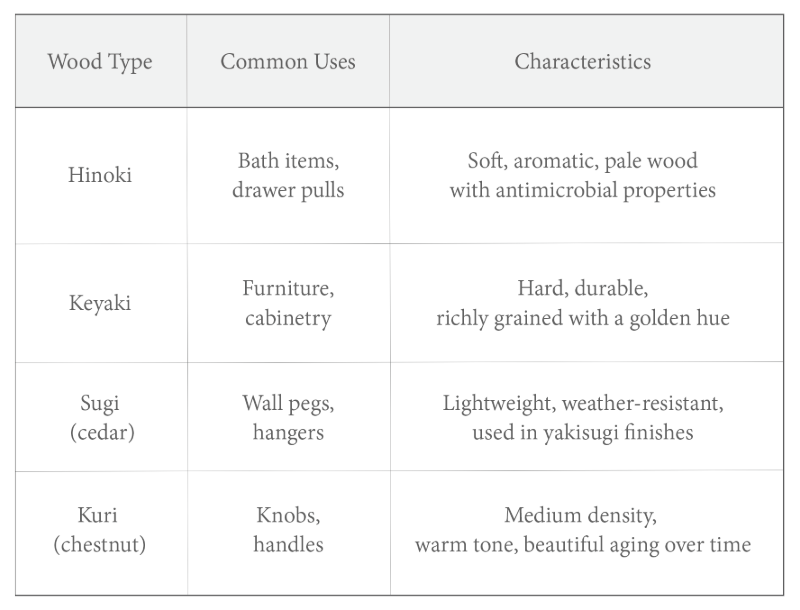
Recognizing what kind of wood you're working with will help you choose the best care routine. For example, hinoki responds well to gentle oils, while keyaki benefits from deeper conditioning due to its density.
Daily and Weekly Care Tips
The most effective way to preserve artisan wood finishes is not through occasional deep treatments, but with gentle, regular maintenance. A little mindfulness goes a long way.
Start with a habit of touch and observation. Run your hand along the wood’s surface when you walk past. Notice any dryness, roughness, or loss of sheen. Is it looking faded? Do your fingers catch on a scratch? These early signs tell you when a deeper cleaning or oiling might be needed.
Here’s a simple weekly routine:
Dust gently using a dry, soft cloth, preferably microfiber or flannel. Always follow the direction of the grain.
Avoid water and sprays. If you must remove smudges, use a slightly damp cloth with warm water only.
Dry immediately after cleaning to prevent moisture absorption.
Let it rest and don’t over-clean. It’s no secret that wood prefers stillness to scrubbing.
Oil Treatments: When and How to Recondition
Eventually, your hardware will need more than a wipe-down. When the finish looks dull or dry, or when the wood feels rougher than usual, it’s time for a gentle oil treatment.
Use food-grade, natural oils with no synthetic additives, especially on sensitive materials like Japanese chopsticks. Camellia oil is a traditional favorite, as it’s lightweight, odorless, and doesn’t darken over time. Tung oil or walnut oil can be used for deeper penetration, especially on keyaki or kuri.
Step-by-step reconditioning:
Clean the surface: The consensus best practice is to use a dry or slightly damp cloth and allow it to fully dry.
Apply a few drops of oil: It’s important to remember that you should apply the oil to a soft cloth and never directly to the wood.
Rub in along the grain: Be careful and ensure that you use light, even strokes to safeguard the material.
Let sit for 30 minutes: This aids in allowing the wood to absorb the oil properly and more effectively.
Buff off the excess: Perform this with a clean cloth until the surface feels smooth and dry.
This treatment can be done every few months or seasonally, depending on your climate. Drier environments call for more frequent oiling, while humid spaces may require less.
Protecting from Moisture, Heat, and Light
Japanese wood has a reputation for aging with grace. However, it does age best when protected from extremes. Even the toughest finish can be undone by direct exposure to sun, water, or abrupt temperature shifts.
Keep your hardware away from radiators, stoves, and sun-soaked windows. If you live in a region with seasonal dryness, consider using a small room humidifier to maintain equilibrium. A humidity level between 40 and 60 percent is ideal for preserving artisan wood.
In kitchens or bathrooms, where steam is frequent, make sure the space is well ventilated. Wipe away condensation promptly, and don’t let water sit on the surface.
Embracing Patina Without Fear
One of the most beautiful aspects of Japanese woodwork is how it embraces time. The concept of wabi-sabi, the beauty of imperfection, teaches us to value what is worn, aged, or softened by use.
A bit of discoloration? A faded patch where your fingers always touch the handle? These are not flaws. They are evidence of life lived, of interaction and ritual. Unlike synthetic finishes that crack or peel, Japanese oils and lacquers soften and deepen. Over time, your hardware will develop a patina that is completely unique to your home.
Let it. Let the wood tell its story.
When to Seek Professional Help
While most maintenance can be done at home, there are moments when a deeper restoration is necessary, especially if your piece has an urushi finish. This natural lacquer requires expertise and patience to repair properly.
Signs you may need professional restoration include:
Deep gouges or cracking in the wood
Flaking or lifting lacquer
Structural damage to joints or pegs
At Rikumo, we’re proud to work with artisan partners throughout Japan who honor these techniques and preserve them for future generations. If you’re unsure whether a piece can be salvaged at home, reach out. It’s worth protecting.
The Ritual of Care
Living with artisan wood isn’t just about aesthetics. It’s about rhythm. Ritual. Connection.
When you take a few minutes to oil a drawer pull, you’re not just maintaining a surface. You’re grounding yourself in an experience. You’re saying yes to quality over convenience, to slow design over fast consumption. A lifestyle rooted in intention, craftsmanship, and quiet beauty is the hope that Rikumo strives for for all of their customers. Contact them today to learn more about what they offer and how you can embrace it too.
So pause. Let your hands slow down. Let the scent of hinoki rise. Let the grain tell you where to go. With every act of care, you’re participating in something larger than a routine. You’re continuing a tradition.