
Elevating the Everyday: The rikumo Philosophy of Japanese Kitchenware
Japanese culinary traditions rely heavily on specific functional tools designed to prepare each dish with absolute precision and care. At rikumo, we believe that the objects you interact with daily should be both technically superior and aesthetically soul-stirring. Home cooks across the United States are increasingly recognizing that specialized equipment dramatically improves meal preparation and food quality.
Adding authentic Japanese cookware to your kitchen arsenal elevates your technique and yields significantly better-tasting results. By understanding the history and utility of these tools, you transform your kitchen into a space of professional-grade efficiency. This investment reflects a commitment to the craft of cooking and a deep respect for the ingredients themselves. rikumo’s expertise lies in bridging the gap between traditional Japanese artisans and the modern American home, making sure every piece we carry meets a rigorous standard of "functional beauty."
The philosophy of Washoku (traditional Japanese cuisine) emphasizes natural seasonal flavors through minimal intervention. This requires tools designed for specific tasks, such as slicing delicate sashimi or simmering dashi. When you invest in kitchenware from rikumo, you participate in a centuries-old tradition of craftsmanship. Many of our items are handcrafted by regional artisans who have spent decades perfecting trades like blacksmithing or ceramics. Owning these items allows you to replicate restaurant-quality textures and flavors with confidence.
Precision at the Edge: High-Carbon Steel Japanese Knives
Professional chefs globally respect Japanese knife-making for its incredible sharpness and edge retention. At rikumo, we curate blades that represent the pinnacle of this craft, often featuring a significantly thinner profile than Western alternatives. This allows for exact cuts without crushing fragile herbs or soft vegetables, preserving the cellular structure and flavor of your food.
Understanding Blade Construction
The Santoku & Gyuto: These are the primary multi-purpose blades essential for daily chopping and slicing. The Gyuto is the Japanese equivalent of a Western chef's knife but with a harder steel and thinner edge, while the Santoku (meaning "three virtues") excels at meat, fish, and vegetables.
The Nakiri: This rectangular blade specializes in processing vegetables with rapid efficiency. Its completely flat edge makes full contact with the cutting board, eliminating the "accordion effect" of partially connected slices often seen with curved Western blades.
High-Carbon Steel vs. Stainless Clad: Pure high-carbon steel is favored by purists for its unmatched sharpness, though it requires immediate drying to prevent oxidation. rikumo also offers stainless-clad options, providing the performance of a carbon core with an outer layer that simplifies daily maintenance.
Iwachu Cast Iron Pans
The Iwachu cast iron pan is a masterclass in the legendary Nambu Tekki tradition, featuring a level of refinement rarely seen in modern cookware. Its remarkably smooth, precision-machined surface develops a natural non-stick seasoning far more efficiently than the rougher textures of standard skillets. These pans are not mere utensils; they are heritage pieces that hold intense, consistent heat, allowing for the deep, professional-grade caramelization that turns simple ingredients into culinary staples.
Donabe: The Heart of Communal Dining
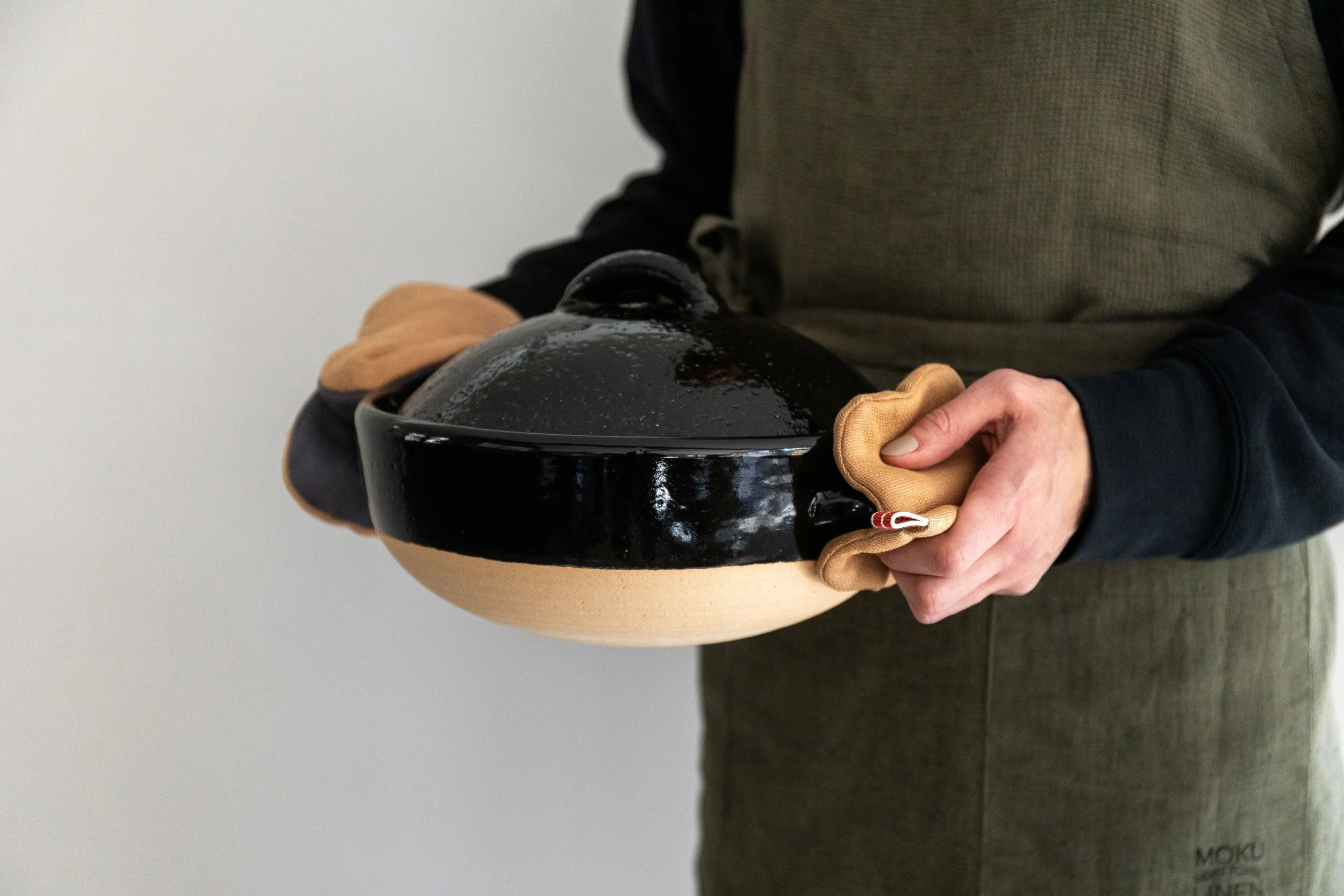
The Donabe clay pot represents centuries of functional design crafted for slow-cooked, one-pot meals. Artisans fashion these vessels from special porous clay, often sourced from the Iga region, which retains heat long after leaving the stove. Serving a bubbling meal directly from a Donabe creates a stunning presentation while keeping the food warm throughout the duration of the meal.
The Iga Donabe: Master of Heat and Flavor
For those seeking the pinnacle of traditional slow-cooking, the Iga Donabe is an unrivaled centerpiece for the kitchen. Hand-sculpted from the prehistoric, fossil-rich clay of the Iga region, these porous vessels possess a unique "breathability" that allows heat to penetrate deep into the core of every ingredient. Whether you are preparing a communal Nabemono (hot pot), steaming seasonal vegetables, or braising hearty winter stews, the Donabe creates a gentle, infrared-like heat that coaxes out the natural sweetness and umami of your food.
Thermal Shock Resistance: High-quality Iga-mono clay can withstand high heat, but it must be cared for. Never heat an empty Donabe or place a hot pot on a cold surface.
The Seasoning Process: New Donabe pots must undergo "medome," a seasoning process using rice porridge to seal the porous clay and prevent leaking or cracking. This ritual is part of the deep connection a cook builds with their rikumo-sourced tools.
Precision Engineering: The SSC Featherweight Cast Iron Frying Pan
The SSC featherweight cast iron frying pan represents a revolutionary leap in Japanese metallurgical craft. Utilizing a proprietary thin-casting technique, these pans achieve a wall thickness of a mere 1.5mm, making them significantly lighter and more maneuverable than any Western cast-iron equivalent. This "featherweight" profile allows for a level of ergonomic control usually reserved for carbon steel, yet it retains the legendary heat retention and radiant cooking power that only cast iron can provide.
Specialty Tools: Omelets and Precision Grating
The Geo 7-Ply Steel Omelet Pan
Creating a classic rolled Tamagoyaki is a meditative art that relies on the geometry of the pan. For this, we recommend the Geo 7-ply steel omelet pan, an exceptional example of Japanese engineering that bridges the gap between professional performance and modern ease. Its multi-layered construction, featuring a core of high-conductivity aluminum sandwiched between stainless steel, ensures perfectly uniform heat distribution across the entire rectangular surface, eliminating the hot spots that often scorch delicate eggs.
This rectangular design is the essential tool for building the uniform, precise layers that define a restaurant-quality omelet. While copper has long been the standard for heat responsiveness, the Geo 7-Ply offers a revolutionary upgrade. Its durable stainless steel interior provides a resilient cooking surface that resists the wear and tear of daily use, making it an ideal choice for home cooks who desire a simpler maintenance routine without sacrificing the professional results of a traditional makiyajaku.
The Oroshigane and Suribachi
Oroshigane Cooper Grater: Unlike Western box graters, these feature hand-cut teeth that produce a fine, creamy paste from ginger, daikon, or fresh wasabi. This breaks down fibers while releasing maximum flavor and aroma without the bitterness caused by bruising.
Suribachi & Surikogi: rikumo offers the ceramic motoshige suribachi mortar, which has fine internal ridges (kushi-no-me), and a natural surikogi pestle. These ridges grip ingredients like sesame seeds, making the grinding process much more efficient than in a smooth mortar. It is the perfect tool for making traditional dressings or mashing tofu for Shira-ae.
Maintenance and Longevity: The rikumo Standard
To keep your investment in peak condition, proper maintenance is non-negotiable. rikumo’s lifestyle expertise extends beyond the sale; we provide the tools and knowledge required for lifelong care.
Paulownia Wood Cutting Boards
A traditional Paulownia cutting board serves as the ideal companion for professional blades. Its remarkably soft, lightweight grain provides a gentle cushion for the sharpest edges, significantly extending the time between manual sharpenings. Beyond its protective nature, Paulownia is naturally resistant to warping and moisture, while its subtle, airy texture creates an incredibly pleasant, clean experience for your everyday food preparation.
The Art of the Table: Serving and Presentation
A complete Japanese kitchen involves more than just cooking; it encompasses the art of serving. rikumo’s expertise includes a curated selection of ceramics and glassware that complement our cookware. Utilizing an Otoshibuta (drop lid) during the simmering process guarantees your vegetables retain their shape and color, which is essential for the visual presentation of a meal. These lids, traditionally made of cedar or cypress, sit directly on the food to circulate heat evenly without the need for stirring.
By incorporating these small but significant accessories, you elevate the dining experience from a simple meal to a curated event. Our collection of Binchotan charcoal-infused items, from water purifiers to cooking tools, further reflects the Japanese commitment to purity and health in every aspect of life.
Conclusion: Building Your Authentic Kitchen with rikumo
Investing in high-quality Japanese cookware is a journey that rewards the home cook with better results and a deeper connection to the culinary arts. Each tool, from the sharpest Gyuto to the humble Otoshibuta, serves a specific purpose designed to enhance the natural beauty of your ingredients. While it may take time to master the maintenance of carbon steel or the seasoning of a Donabe, the effort is well worth the superior flavors and textures you will achieve.
As you continue to explore the world of Japanese kitchen tools, remember that quality always triumphs over quantity. Start with the essentials and expand your collection as your skills grow. These tools are the heritage of a culture that views cooking as a profound act of care. With the right must-have Japanese cookware from rikumo, every meal becomes an opportunity to practice mindfulness and excellence in your own home.